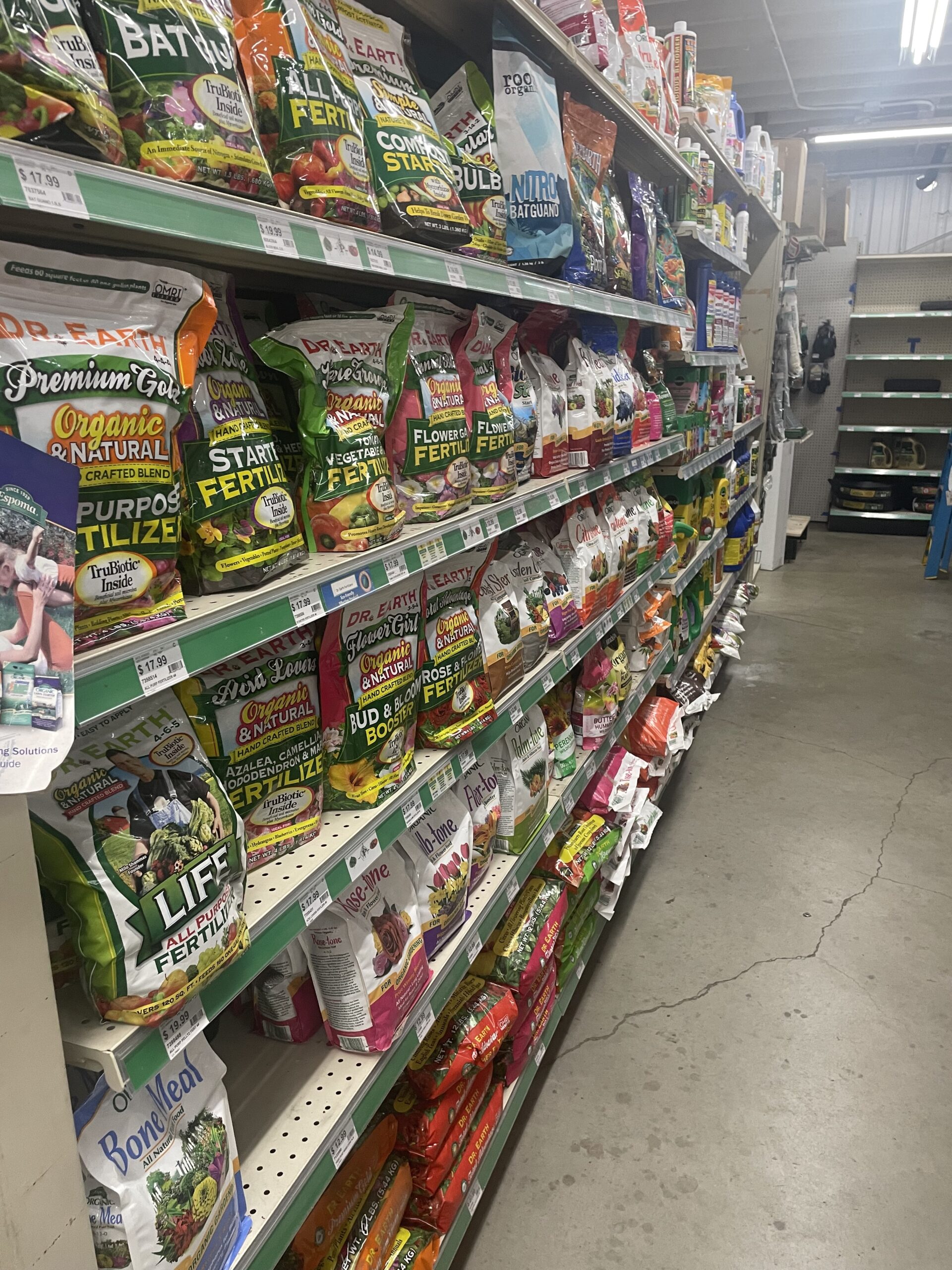

Healthy gardens begin with healthy soil, but even healthy soil may need additional nutrients from time to time. Understanding the different types of fertilizers can help gardeners make informed decisions based on their plants, soil conditions, and gardening goals.
Rather than asking which fertilizer is “best,” it is often more useful to understand when each type of fertilizer may be appropriate.
In East Contra Costa County, our hot, dry summers and varied soil conditions mean that fertilizer needs can differ greatly from one garden to another.
What Do Plants Need?
Plants require three primary nutrients:
- Nitrogen (N) – promotes leafy green growth.
- Phosphorus (P) – supports strong roots, flowers, and fruit production.
- Potassium (K) – improves overall plant health and disease resistance.
Many fertilizers display these nutrients as an N-P-K ratio on the package.
Natural (Organic) Fertilizers
Natural fertilizers come from plant, animal, or mineral sources and gradually release nutrients as soil organisms break them down.
Examples include:

- Compost
- Worm castings
- Aged manure
- Fish emulsion
- Bone meal
- Blood meal
- Kelp meal
Advantages
- Improves soil structure
- Encourages beneficial soil microbes
- Releases nutrients slowly
- Reduces the risk of fertilizer burn
- Builds long-term soil health
Considerations
- Nutrients become available more slowly.
- Results may take longer to see.
- Larger quantities may be needed.
Synthetic (Commercial) Fertilizers
Synthetic fertilizers are manufactured to provide nutrients in forms that plants can absorb quickly.

Examples include:
- Balanced garden fertilizers
- Water-soluble fertilizers
- Slow-release granular fertilizers
- Specialty fertilizers for roses, tomatoes, or lawns
Advantages
- Fast results
- Precise nutrient formulations
- Convenient to apply
- Helpful for correcting nutrient deficiencies
Considerations
- Overapplication can damage plants.
- Excess nutrients may leach or run off if applied improperly.
- They do not improve soil structure.
Which Is Better?
The answer depends on your gardening goals.
Many experienced gardeners combine both approaches.
For example:
- Improve soil each year with compost or other organic matter.
- Use synthetic fertilizers only when plants need an additional nutrient boost.
- Follow soil test recommendations whenever possible.
Healthy soil often reduces the need for frequent fertilizer applications.
Before purchasing fertilizer, observe your plants carefully. Healthy plants growing in healthy soil may need little or no supplemental fertilizer. Compost, mulch, and proper watering often provide greater long-term benefits than routine fertilizing.
Feed the Soil First
A common gardening saying is:
“Feed the soil, and the soil will feed the plants.”
Adding compost, mulch, and other organic materials encourages earthworms and beneficial microorganisms that naturally recycle nutrients for plants.
Healthy soil also holds water better, improves root growth, and supports long-term garden productivity.
Tomatoes, peppers, squash, roses, citrus, and many summer annuals may benefit from supplemental fertilizer during the growing season, while many California native plants require little or no additional fertilizer once established.
Before You Fertilize
Ask yourself:
- Does the plant actually need fertilizer?
- Has a soil test been performed?
- Is the problem caused by insects, disease, watering, or poor soil rather than nutrient deficiency?
Applying fertilizer without understanding the cause of poor plant growth may not solve the problem.
Final Thoughts
Both natural and synthetic fertilizers have a place in the home garden. The best choice depends on your plants, your soil, and your gardening philosophy.
By understanding how fertilizers work and by building healthy soil over time, gardeners can enjoy stronger plants, healthier harvests, and more sustainable landscapes.
Member Gardening Tip
This article was inspired by a suggestion from DIG member Ginger Guider. We appreciate members who share gardening ideas and topics that help us build a stronger educational resource for gardeners throughout East Contra Costa County.
DIG Gardening Tip #1
Healthy gardens begin beneath the surface. Building healthy soil with compost and organic matter is one of the best long-term investments you can make in your landscape.
DIG Gardenering Tip #2
Before purchasing fertilizer, ask yourself, “Does my garden actually need it?” Healthy soil enriched with compost and mulch often supplies many of the nutrients plants need. A simple soil test can help determine whether additional fertilizer is necessary.
Coming Soon in the DIG Garden Education Series
Knowing what fertilizer to use is only part of the equation. Just as important is understanding when to fertilize and how to apply fertilizers for the best results.
In our next Garden Education article, “When and How to Fertilize Your Plants,” we’ll discuss:
- The best times of year to fertilize trees, shrubs, vegetables, lawns, and flowers.
- How often different plants should be fertilized.
- The difference between granular and liquid fertilizers.
- Proper application techniques to avoid over-fertilizing.
- Seasonal fertilizing schedules for East Contra Costa County gardens.
Choosing the right fertilizer is the first step. Applying it at the right time and in the right way helps plants grow healthier while reducing waste and protecting the environment.
Watch for this upcoming article on the Delta Informal Gardeners website.