What starts as curiosity can sometimes become a lifelong passion.
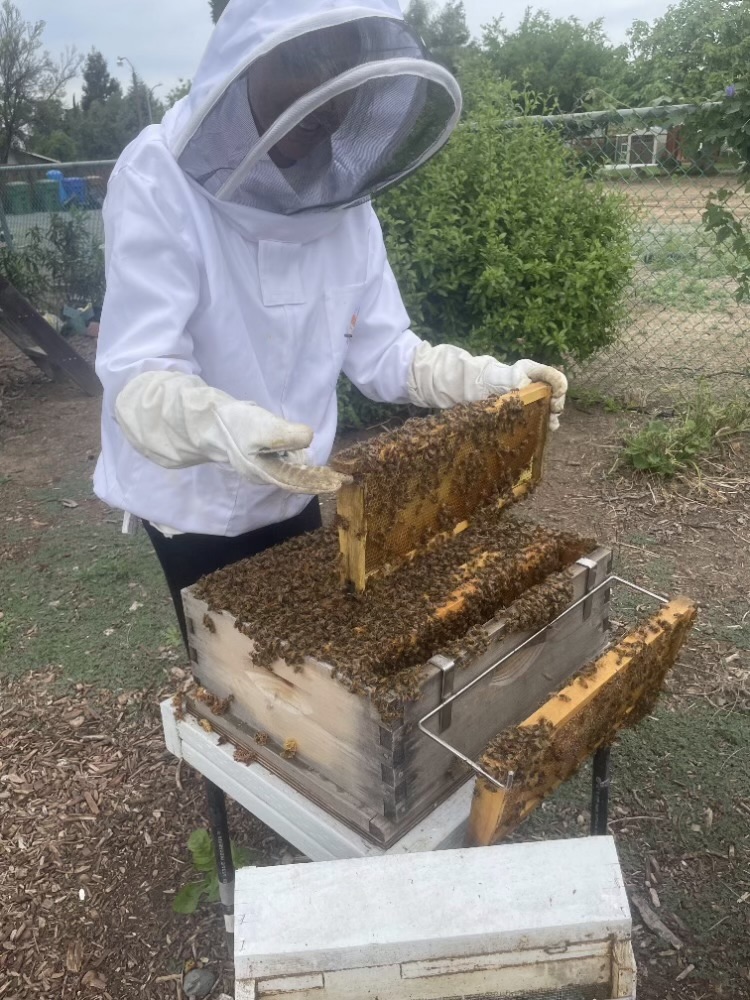
For Delta Informal Gardeners member Margo Olson, that journey began just four years ago when a swarm of honey bees unexpectedly found her. Today, she cares for two thriving honey bee colonies in her backyard and enjoys sharing what she’s learned with fellow gardeners.
At our July meeting, Margo will take us inside the fascinating world of honey bees. Along the way, she’ll bring a demonstration hive, share samples of local honey, and explain how gardeners can create landscapes that support healthy pollinator populations.
Whether you’re an experienced gardener or simply enjoy watching bees visit your flowers, you’ll leave with a better understanding of these remarkable insects and the important role they play in our gardens.

Meet Margo Olson
Margo’s interest in beekeeping grew from two simple goals: becoming a better gardener and enjoying the unique flavor and health benefits of fresh local honey. Her backyard apiary has grown from a single colony to two healthy hives, giving her firsthand experience with everything from seasonal hive management to harvesting honey. She believes that every gardener can make a difference by creating habitats that provide bees with food, water, and safe places to thrive.
During her presentation, Margo will share practical advice, answer your questions, and offer a closer look at one of nature’s most important pollinators.
Questions We’ll Explore Together
Every gardener has questions about bees. Here are just a few we’ll discuss during the evening.

Why are bees so important?
Honey bees and native bees pollinate many of the fruits, vegetables, and flowers that grow throughout East Contra Costa County. Healthy pollinators help create healthier gardens.
Ask Margo:
What should every gardener know about the relationship between honey bees and native bees?
Which plants attract the most bees?
Some flowers provide far more nectar and pollen than others.
We’ll discuss the plants that keep pollinators visiting your garden throughout the growing season. Looking for bee-friendly plants Read our article on Pollinator-Friendly Plants That Thrive in East Contra Costa County.
Ask Margo:
Which plants do you recommend for East Contra Costa County gardens?

Should gardeners provide water?
During our hot California summers, bees need reliable sources of water.
Ask Margo:
What’s the best way to provide water without attracting mosquitoes?
Are honey bees really aggressive?
Most bees spend their day gathering nectar and pollen, not looking for people to sting.
Ask Margo:
How can gardeners work safely around bees?

Why are bee populations declining?
Habitat loss, pesticides, diseases, and changing weather all affect pollinator populations.
Ask Margo:
What simple steps can gardeners take to help?
What should you do if you discover a swarm?
Seeing thousands of bees together can be startling—but swarms are a natural part of a colony’s life cycle.
Ask Margo:
Who should homeowners contact if they discover a swarm?

Is beekeeping right for you?
Keeping bees can be a rewarding hobby, but it also requires knowledge and commitment.
Ask Margo:
What advice would you give someone considering their first hive?
Join Us in July
Come meet fellow DIG member Margo Olson and discover the remarkable world of honey bees.
Enjoy a demonstration hive, sample local honey, ask your questions, and learn practical ways to support pollinators in your own garden.
Meeting Information
Date: July 27, 2026
Time: 7:30 PM
Location: Brentwood Community United Methodist Church
809 Second Street,
Brentwood, CA 94513
Bring your questions and curiosity as we explore the fascinating world of bees and pollinators.
Happy Gardening!
Delta Informal Gardeners
Encouraging gardening through education and community beautification throughout East Contra Costa County.