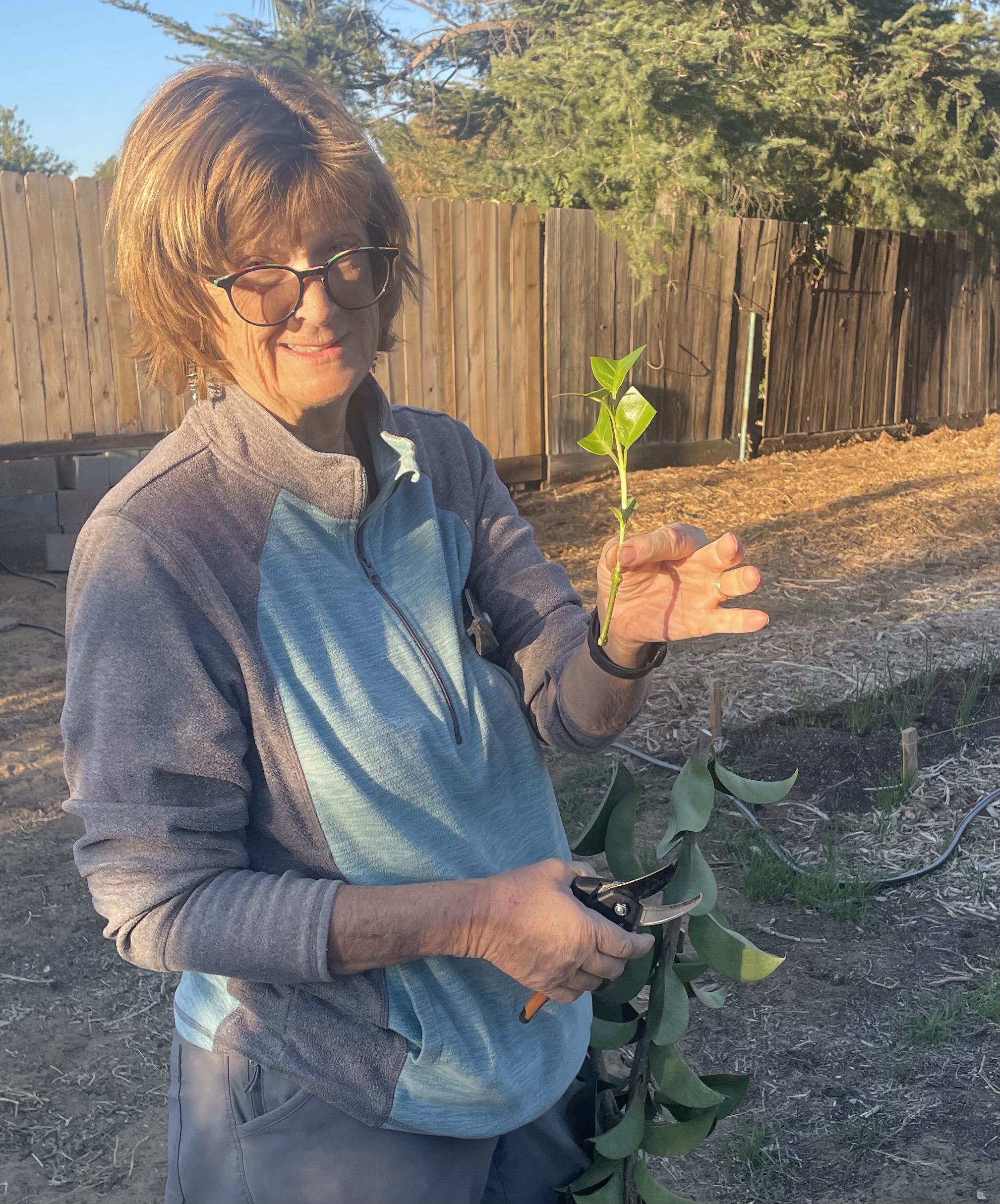
Gathering plant cuttings is one way to turn plants already growing in your yard into new plants for your garden—or DIG’s plant sale.
A familiar shrub can provide material for new plants. That is one of the enjoyable parts of propagation: looking at what you already have and seeing what it could become.
Recently, Robin demonstrated the first steps using a privet shrub in our yard. With pruners in hand, she collected a branch, trimmed a smaller piece, and held it up for a closer look. Our photos and two short videos follow that process.
Start with the Plant in Your Yard
Before gathering material, identify the plant and look for healthy stems without obvious pest or disease damage. Different plants need different approaches, so knowing the plant’s name helps you choose the right method and season.
For this demonstration, Robin used privet. The purpose was to show how a branch from an established shrub can provide smaller pieces for propagation.
If you are collecting from someone else’s garden, ask permission first. It is also helpful to check with the DIG propagation team about which plants are needed before bringing material.
A Branch Becomes a Cutting
Collecting a branch is the beginning. The next step is choosing and preparing the smaller stems that will become cuttings.
In the second video, Robin uses hand pruners to trim a smaller piece from the collected branch. Seeing her hands at work makes this step easier to follow than words alone.
For many stem cuttings, preparation includes making a cut just below a node—the place where a leaf joins the stem—and removing the lower leaves while leaving some foliage at the top. The details depend on the plant and the type of cutting. (missouribotanicalgarden.org)

Keep Your Material Fresh and Labeled
Cut stems can dry out before they reach the propagation table. Keep collected material cool, out of direct sun, and moist during transport. A damp paper towel around the cut ends can help. (yardandgarden.extension.iastate.edu)
Label each batch with the plant’s name and the date collected. Include the variety if you know it. That small step makes it much easier for volunteers to keep track of what they are growing.
At the propagation table, the cuttings still need to be prepared for rooting and cared for afterward. Robin’s demonstration shows the gathering and trimming stages—the start of the journey.
Growing Plants and Sharing Knowledge
DIG’s plant sale begins long before sale day. It starts with members sharing plants, gathering material, preparing cuttings, and caring for them as they develop.
There is a place for beginners in that process. You do not need to arrive knowing every plant name or every technique. Watching someone demonstrate, asking a question, and trying a few cuttings are all ways to learn.
Robin’s demonstration is a reminder that gardening knowledge is often best shared person to person—with a plant in one hand and pruners in the other.
Have a plant in your yard you would like to propagate? Share its name or a photo with DIG. Let’s learn together and see what we can grow.